Why Are Cabinet Pulls So Expensive?
If you've ever shopped for new cabinetry or undertaken a kitchen renovation, you've likely encountered a surprising reality: cabinet drawer pull handles can cost far more than expected. A single drawer pull for cabinets might range from $2 to over $20—sometimes even more for designer brands. At first glance, this seems disproportionate for what appears to be a simple metal bar or knob. So, why are cabinet pulls so expensive? The answer isn't about markup alone; it's rooted in material science, manufacturing precision, design philosophy, and long term performance.
Material Matters: Why Zinc Alloy Drives Up the Cost (and Quality)
One of the primary reasons kitchen hardware drawer pulls are so expensive lies in the raw materials used. While budget options may rely on plastic, hollow aluminum, or low-grade pot metal, premium drawer pulls for cabinets are often made from solid zinc alloy—a material prized in high-end furniture and architectural hardware.
Zinc alloy offers a rare balance: it's dense enough to feel substantial in hand, yet malleable enough to be cast into intricate, clean-lined modern forms without porosity or warping. Unlike iron or steel, it resists rust and corrosion—critical in humid environments like kitchens and bathrooms. And unlike plastic, it won't crack under repeated stress or degrade under UV exposure.
Brands like Filta, for instance, specify solid zinc alloy as the base material for their modern kitchen hardware drawer pulls. This isn't just a marketing claim—it's a functional necessity. Solid casting ensures structural integrity, consistent weight distribution, and compatibility with advanced finishing techniques. The result? A cabinet drawer pull handle that feels premium, operates smoothly, and endures daily use without loosening or chipping.
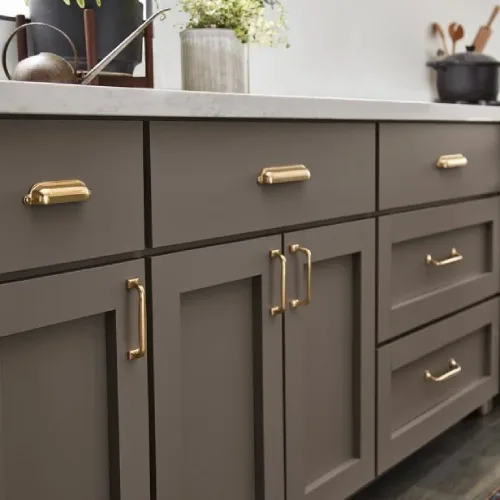
Moreover, zinc alloy serves as an ideal substrate for high-end surface treatments. Whether you prefer brushed satin nickel, matte black, titanium gold, or matt brushed brass, these finishes adhere better and last longer on zinc than on cheaper substrates. That durability justifies the higher upfront cost over time.
Finishes, Tolerances, and Craftsmanship: The Invisible Labor Behind Every Pull
Beyond material, the cost of drawer pulls for cabinets is heavily influenced by finishing and precision engineering. A truly high-quality pull isn't just molded and painted—it undergoes multiple stages of polishing, cleaning, plating, and quality inspection.
Take brushed finishes, for example. Achieving a uniform grain direction across thousands of units requires automated brushing machines calibrated to micron-level consistency. Any variation creates visual mismatches—unacceptable in a modern kitchen where pulls are installed in rows. Similarly, PVD (Physical Vapor Deposition) coatings—used for colors like titanium gold—involve vacuum chambers and atomic-level deposition processes that enhance scratch and fade resistance. These aren't cheap, but they ensure your kitchen hardware drawer pulls look new for years.
Tolerances also matter. The distance between screw holes—known as “center-to-center” measurement—must be exact. Filta, for instance, offers standard sizes like 76mm, 128mm, and 192mm, each machined to ±0.1mm accuracy. Why? Because even a 1mm error can prevent proper alignment on pre-drilled cabinets, leading to wobble or installation failure. Precision like this demands CNC tooling, rigorous QA, and skilled oversight—all of which add to production costs.
Additionally, every pull typically includes two 4×22mm (or 8/32” 1”) stainless steel screws, chosen for corrosion resistance and thread strength. Including hardware might seem minor, but it reflects a commitment to a complete, install-ready solution—another subtle cost factor often overlooked.
Design Diversity: How the Types of Drawer Pulls Affect Pricing
Not all types of drawer pulls are created equal. The market includes everything from minimalist bar pulls and ergonomic curves to ornate vintage knobs and integrated LED-lit handles. Naturally, complexity drives cost.
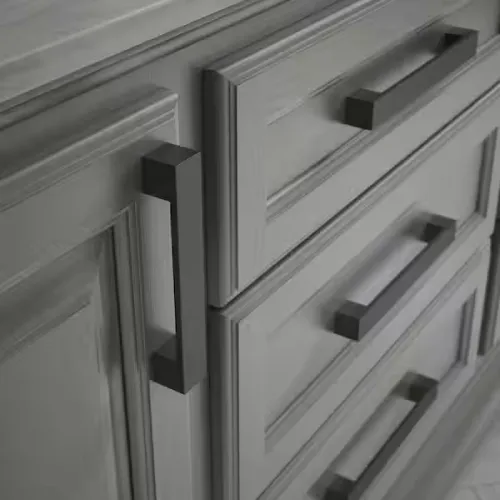
Modern cabinet drawer pull handles, like those in Filta's collection, favor clean lines and geometric simplicity—but “simple” doesn't mean easy to produce. Achieving sharp edges, seamless transitions, and flawless surface continuity requires advanced die-casting molds and post-casting machining. A slight draft angle or surface blemish can ruin the minimalist aesthetic that defines contemporary interiors.
Customization further impacts pricing. While mass-produced pulls in standard finishes are more affordable, brands that offer customized colors (as Filta does) must manage dye lots, finish testing, and small-batch production—increasing per-unit costs. Yet this flexibility allows designers and homeowners to match pulls precisely to their cabinetry, backsplash, or lighting fixtures, creating a cohesive visual narrative.
It's also worth noting that modern decorative pulls serve dual roles: function and focal point. In open-concept kitchens, hardware is often one of the few tactile and visual details that define the space's character. As such, designers are willing to pay more for pulls that elevate the entire aesthetic—making price a reflection of design intent, not just utility.
Longevity vs. Replacement: The Hidden Economics of Quality Hardware
Perhaps the most compelling reason why cabinet pulls are so expensive is their role as long-term functional components. Unlike paint or backsplashes, which can be refreshed periodically, drawer pulls for cabinets are subjected to constant physical interaction—often dozens of times per day per household member.
Low cost alternatives may save money upfront but frequently suffer from:
Loose mounting due to soft metal stripping