
2024-08-30
How Can I Tell Which Hinge I Have In My Kitchen Cabinet?
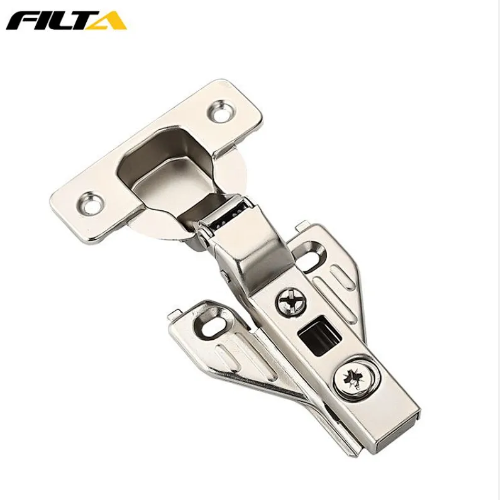
When replacing kitchen cabinet hinges, several factors must be considered to ensure you choose the right replacement. This can make it difficult to determine which hinge is the correct fit. This page is here to guide you through the process, providing all the information you need to make an informed decision as you explore our extensive selection of eccentric hinge.
Door Opening Angle
The door's opening angle refers to how far it swings out from the cabinet. The most common angles range between 95° and 110°. However, for corner units, the angle can be as wide as 170°, while half doors that close into a corner may have a smaller angle of 40° to 50°.
Cup Hole Diameter in the Door
It's essential to measure the diameter of the hole in the door where the hinge is installed. Common diameters are 26mm, 35mm, or 40mm for larger hinges. Be sure to measure the hole itself, not the hinge, as the hinge might be slightly smaller than the hole.
Hinge Overlay Options
There are three common types of hinge overlay:
Full Overlay: The door fully covers the cabinet carcass end when closed.
Half Overlay: Two doors are positioned on either side of a single cabinet carcass.
Inset Overlay: The door sits flush with the front edge of the cabinet carcass when closed.
Hinge Mounting Plate Connection
It's important to check how the hinge attaches to the cabinet carcass. Most hinges connect in one of two ways:
Clip On: Common in kitchens, these hinges easily 'clip' onto the mounting plate on the cabinet side, requiring no screws for attachment.
Slide On: These hinges 'slide' onto the mounting plate and then need to be secured with screws to hold them in place.
Carcass and Door Thickness
It's important to consider the thickness of both the door and the cabinet carcass, as this will determine the appropriate size of the mounting plate. Standard thicknesses are usually 15/16mm or 18/19mm, but other sizes are available, including specialized plates for glass and plastic doors.

Understanding Hinge Terminology
The world of woodworking, especially when it comes to cabinets and hinges, is filled with specialized terminology. Our goal is to clear up any confusion that might arise from unfamiliar terms. We hope this directory helps you gain a better understanding and increases your knowledge on the subject.
PRODUCT KNOWLEDGE - March 10, 2026
Difference Between Passage and Privacy Lockset
Learn the difference between passage and privacy locksets. Discover how bathroom privacy lock handles improve interior door functionality.
March 05, 2026
Modern Keyless House Door Lock for Secure Residential Access
Learn about smart door entry system security protocols, digital door entry systems selection criteria, and installation compatibility factors.
PRODUCT KNOWLEDGE - February 28, 2026
Why Modern Electronic Keypad Door Lock Technology Matters to Businesses
Explore modern electronic keypad door lock solutions for commercial use, covering security standards, smart integration, and OEM supply insights for global buyers.