Which Cabinet Pulls Are Best?
When redesigning a kitchen, bathroom, or wardrobe space, one of the most frequently asked questions is: “Which cabinet pulls are best?” At first glance, the answer might seem purely aesthetic—after all, hardware is a finishing touch. But in reality, the ideal drawer pulls modern interiors demand must balance form, function, durability, and compatibility with your cabinetry system. Whether you're a homeowner, interior designer, or contractor, understanding the nuances of metal drawer pulls, custom drawer pulls, and installation specs can make the difference between a stylish space and one that stands the test of time.
Material Integrity: Why Solid Zinc Alloy Tops the List for Metal Drawer Pulls
Not all metal drawer pulls are created equal. While stainless steel, brass, and aluminum are common, solid zinc alloy has emerged as the preferred material for premium cabinet hardware—especially in high traffic areas like kitchens and bathrooms.
Zinc alloy offers a unique combination of density, corrosion resistance, and casting precision. Unlike hollow or plated alternatives, solid zinc ensures structural integrity, meaning your draw pull won't bend, crack, or loosen over time—even with daily use. It also provides a smooth, consistent surface ideal for high-end finishes like brushed satin nickel, matte black, or titanium gold.
Take, for example, the construction behind Filta's elegant gold fluted handle series. These pulls are cast from solid zinc, not stamped or assembled from multiple parts. This monolithic design eliminates weak joints and ensures uniform weight distribution—critical for larger drawer pulls modern cabinetry often features. Additionally, zinc's natural resistance to oxidation means these pulls maintain their luster without frequent polishing, even in humid environments.
For professionals specifying hardware across dozens of units, material consistency is non-negotiable. A batch of solid zinc pulls will look and feel identical, avoiding the mismatched tones or textures that plague lower-grade alternatives.

Design Meets Function: Evaluating Modern Drawer Pull Styles
The phrase “drawer pulls modern” encompasses more than just minimalist lines—it reflects a shift toward ergonomic, tactile, and visually harmonious hardware. Today's best cabinet pulls often feature subtle textures (like fluting or linear grooves), soft edges, and finishes that complement rather than dominate a space.
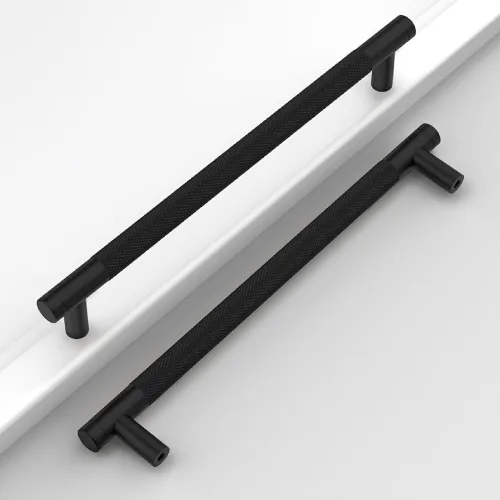
One standout trend is the fluted handle, which adds dimension without visual clutter. The gentle ridges provide better grip while catching light in dynamic ways—ideal for matte or metallic finishes like titanium gold. These details may seem decorative, but they serve functional purposes: improved grip, fingerprint resistance, and depth perception in low-light settings.
When asking “which cabinet pulls are best?”, consider how the design integrates with your cabinetry profile. Recessed panels, slab doors, and shaker styles each call for different pull proportions. For instance, longer center-to-center measurements (e.g., 128mm or 192mm) suit wide drawers, while compact 76mm pulls work well on narrow cabinet doors or wardrobe units.
Moreover, modern design favors consistency. Using the same metal drawer pulls across kitchen, pantry, and bathroom creates visual continuity—a principle often overlooked in DIY renovations. Brands that offer multiple standard sizes (like Filta's 76/128/192mm options) support this unified approach without requiring custom fabrication.
Customization Without Compromise: The Rise of Custom Drawer Pulls
While off-the-shelf hardware meets most needs, the demand for custom drawer pulls is growing—especially in luxury residential and boutique commercial projects. Customization isn't just about color; it includes finish texture, length, projection (how far the pull extends from the surface), and even ergonomic contouring.
The key to successful customization lies in the manufacturer's capability. Not all suppliers can maintain finish consistency across small batches. However, brands with in-house plating and PVD (Physical Vapor Deposition) facilities—like those producing Filta's elegant gold fluted handle—can reliably deliver customized colors such as matte black, brushed brass, or bespoke metallics while preserving durability.
It's worth noting that true customization doesn't mean sacrificing lead time or quality control. Reputable manufacturers with high-volume capacity (e.g., 2 million pieces per month) can accommodate OEM orders without compromising on inspection standards. This scalability ensures that even custom drawer pulls meet the same performance benchmarks as standard lines.
For designers, this means greater creative freedom: you can specify a unique finish to match faucets, lighting fixtures, or furniture accents—all while knowing the hardware will withstand daily wear.
Practical Considerations: Installation, Hardware, and Longevity
Beyond aesthetics and material, the “best” cabinet pulls must be practical to install and maintain. This includes:
Included mounting hardware: Quality pulls come with appropriately sized screws—typically 4×22mm or 8/32” 1” stainless steel—that resist rust and provide secure anchoring.
Center-to-center accuracy: Even a 1mm deviation can prevent proper alignment on pre-drilled cabinets. Precision-machined pulls ensure seamless installation.
Finish durability: Look for finishes applied via electroplating or PVD, which bond at the molecular level and resist chipping, fading, or chemical damage from cleaners.
Longevity is another silent metric. A well-made draw pull should last 10–15 years without loosening, tarnishing, or requiring replacement. This is where solid construction pays off: hollow or plastic-core pulls may save a few dollars upfront but often fail within 2–3 years in high-use areas.
Additionally, consider packaging and logistics. Professional-grade hardware is typically individually poly-bagged, then boxed to prevent scratches during shipping—critical for maintaining finish integrity before installation.