When To Use Metal Door Hinges?
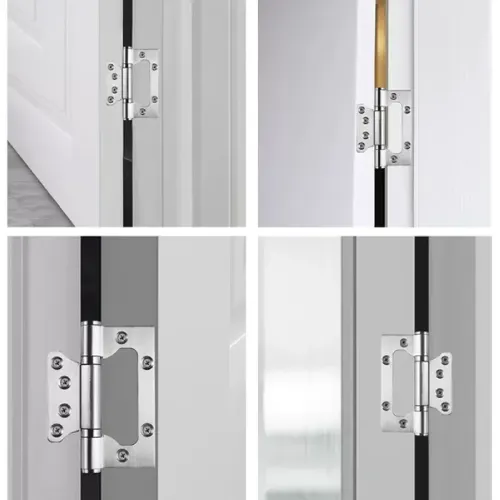
When it comes to door hardware, hinges may seem like a minor detail—but their impact on performance, safety, and longevity is anything but small. Among the various materials used in hinge manufacturing, metal door hinges—particularly stainless steel security door hinges—stands out for its strength, resilience, and adaptability. Whether in residential, commercial, or industrial environments, the decision to use metal door hinges can significantly influence a door's functionality and lifespan.
Why Choose Metal Door Hinges for High Traffic and Commercial Applications?
In environments where doors are opened and closed hundreds of times daily—such as office buildings, hospitals, schools, and retail spaces—standard plastic or lightweight hinges quickly wear out. This is where commercial metal door hinges prove their value. Made from durable alloys like stainless steel or hardened steel, these hinges are engineered to withstand constant use without warping, loosening, or failing.
Metal hinges offer several advantages in commercial settings:
High load-bearing capacity – capable of supporting heavy fire-rated or solid-core doors.
Resistance to mechanical stress – reduced risk of sagging or misalignment over time.
Low maintenance – minimal need for lubrication or replacement.
Stainless steel, in particular, is favored for its corrosion resistance and sleek appearance. Door hinges stainless steel are not only strong but also visually neutral, making them suitable for modern, minimalist interiors. Their non-porous surface resists bacterial growth, a critical feature in healthcare and food service environments.
For commercial projects aiming for long-term reliability, specifying commercial metal door hinges is not just a practical choice—it's a strategic investment in building performance and occupant safety.

Security Considerations: When to Specify Stainless Steel Security Door Hinges
Security is a primary concern in both residential and institutional buildings. A door is only as secure as its weakest component, and hinges are often overlooked in security planning. Standard hinges with exposed pins can be easily removed from the outside, allowing unauthorized entry. This is where stainless steel security door hinges become essential.
These hinges are designed with anti-lift pins, non-removable axles, and reinforced knuckles to prevent tampering. When installed on exterior doors, gates, or access points to sensitive areas, they provide a critical layer of protection. Stainless steel adds an extra advantage: its high tensile strength makes it resistant to cutting or prying, unlike softer metals.
In high-risk environments—such as government facilities, data centers, or ground-floor apartments—stainless steel security door hinges should be considered a standard specification. They are especially effective when paired with reinforced door frames and multi-point locking systems. The combination creates a unified defense against forced entry.
Moreover, stainless steel does not degrade when exposed to weather, making it ideal for external applications. Unlike galvanized or painted steel hinges that can rust and weaken over time, door hinges stainless steel maintain their structural integrity even in coastal or humid climates.
Heavy Duty Applications: The Role of Heavy Duty Metal Door Hinges in Industrial and Public Buildings
In industrial facilities, warehouses, and public infrastructure, doors are often massive—constructed from solid wood, steel, or glass—and subjected to extreme conditions. Standard residential hinges simply cannot handle the load or operational demands. This is the domain of heavy duty metal door hinges.
These hinges are characterized by:
Thicker leaf plates and larger pin diameters
Ball or roller bearings for smooth operation under load
Full mortise or wrap-around mounting for maximum stability
Heavy duty metal door hinges are commonly used in fire-rated doors, loading bay entrances, and emergency exits. Their robust construction ensures that doors remain aligned and functional even after years of continuous use. In safety-critical applications, such as fire doors, hinge failure can have catastrophic consequences. Therefore, compliance with building codes and fire safety standards is essential—and metal hinges, particularly those made from stainless steel, are often required to meet these regulations.
Stainless steel versions of heavy-duty hinges offer additional benefits, including resistance to chemical exposure and high temperatures. This makes them suitable for use in laboratories, manufacturing plants, and transportation hubs where environmental conditions are harsh.
Environmental and Aesthetic Factors: Matching Metal Hinges to Building Design and Climate
Beyond strength and security, the choice of metal hinges should also consider environmental and aesthetic factors. For example, in coastal regions, salt-laden air accelerates the corrosion of ordinary steel hinges. Over time, this leads to pitting, rust stains, and mechanical failure. Door hinges stainless steel, with their chromium oxide protective layer, resist this degradation and maintain both function and appearance.
Similarly, in modern architectural designs that emphasize clean lines and minimal hardware, metal hinges with a brushed or satin finish can blend seamlessly into the overall aesthetic. Concealed or pivot-style stainless steel security door hinges allow for frameless or flush-mounted doors, supporting the sleek, uninterrupted look popular in contemporary homes and offices.
Even in heritage or traditional buildings, metal hinges can be specified in finishes that complement the architectural style—such as antique brass over stainless steel—without sacrificing durability. The versatility of metal, especially stainless steel, allows it to serve both functional and design-oriented purposes.