
2026-01-19
Is It Better to Put a Door Stop on a Door or Wall?
Every homeowner and building professional has faced the challenge of preventing doors from causing damage to walls, frames, and hardware. One of the longstanding debates in interior design and facility maintenance is whether the best place to install a door stop is on the door itself or on the adjacent wall or molding. This question matters because the installation location determines effectiveness, longevity, and how users interact with doors day-to-day.
Fundamental Principles of Door Stopper Placement (inside door stopper considerations)
Why Door Stop Location Matters?
The primary goal of any door stop is to restrict motion safely and reliably. Without proper stopping, swinging doors can dent or puncture walls, damage hardware, and create ongoing maintenance costs. An effective stop absorbs or redirects kinetic motion such that neither the door nor the wall bears harmful force. Experts emphasize that correct placement is not just convenience — it determines whether a door system performs efficiently for its expected lifecycle.
Deciding between mounting a door stop on a wall or directly on the door depends on multiple factors:
Geometry of the doorway and hallway
Door swing angle and clearance requirements
Material strength and durability expectations
Whether the stop must serve primarily to protect the wall, hold the door open, or act as a metal door blocker
Mechanisms of Door Stops and How Placement Affects Performance
There are several mechanical categories of door stoppers:
Baseboard and Wall Mounted Stops: Installed on the wall or baseboard at the point where the door handle or edge might otherwise impact — providing a direct protective buffer.
Hinge Pin or Door-Mounted Stops: Attached near the door hinge or directly to the door, limiting its swing angle from within the door's mechanical system.
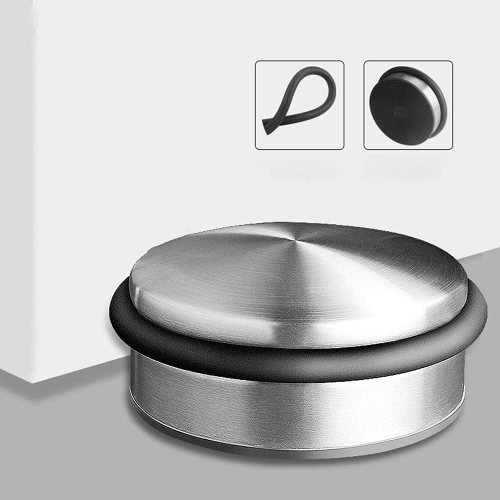
Floor Mounted or Surface Stops: Anchored on the floor to intercept the door's motion before it reaches adjacent surfaces.
Wedges and Portable Stops: These sit under the door and rely on static friction to hold it in place temporarily.
Each type fulfills a slightly different functional niche. A permanent wall stop prevents damage when a door swings fully open; a hinge stop restricts motion when traditional wall protection isn't possible; a floor stop can block doors in wide-opening situations; and wedges are ideal for ad-hoc control or holding doors open. The choice of placement influences not just performance but user interaction and safety.

Door Stop on Wall vs. Door — Deep Dive into Advantages and Challenges
Wall Mounted Door Stop: Best Practices and Functional Advantages
Wall placement remains the most traditional and widely recommended approach for indoor door stops. When a door swings toward a wall, a wall-mounted stop placed at the contact point of the door's handle or edge minimizes impact energy transmitted to drywall or paneling. This solution is especially effective when floor drilling is impractical or when aesthetics demand low-profile hardware.
Core advantages of wall placement include:
Direct Protection at the Impact Point: A wall stop intercepts the door exactly where it would make contact, reducing dents, paint chips, and plaster damage.
Minimal Interference With Flooring or Traffic: Unlike some floor fixtures, wall stops remain out of the way and do not create trip hazards.
Design Versatility: Wall stops can be selected in finishes that complement trim and hardware.
Maintenance Ease: Because they are physically positioned away from high-traffic zones, they accumulate less dirt or wear.
However, wall mounts require precise measurement to ensure they stop the door at just the right position. If installed too far, the door may still scuff a wall; too close, and it may restrict necessary clearance.
Door Mounted Stop: When and Why It Works
Opposed to wall installation, attaching a stop directly to the door — often near the hinge or handle frame — changes how door motion is limited. Door-mounted solutions, such as hinge pin stops, are highly effective when adjacent wall surfaces are absent, delicate, or unsuitable for drilling.
The major benefits of mounting on the door include:
No Wall Penetration Required: Useful where wall material is fragile or cannot be altered, such as plaster or heritage surfaces.
Adjustable Swing Limitation: Hinge pin stops offer adjustable limit points, controlling how far a door can open without relying on wall buffers.
Integrated Mechanical Control: A door-mounted stop becomes part of the door's motion system, ideal for cabinets, closets, rooms with adjacent furniture, or where aesthetics prohibit visible wall hardware.
Challenges include ensuring that the door has sufficient structural strength near the mounting point. Hollow-core or lightweight doors may not receive robust anchoring, potentially reducing effectiveness. In some cases, fixing hardware directly to the door risks damage to the door surface if the stop bears excessive force over time.
Floor Mounts and Hybrid Solutions
For spaces where neither wall nor door mounting is ideal, floor-mounted options serve as an alternative. These intercept motion before the door reaches the wall plane and are common in commercial environments or with heavier doors. Combined approaches are also used: a floor stop for main interception supplemented by an inside door stopper placement near lever points.
PRODUCT KNOWLEDGE - March 10, 2026
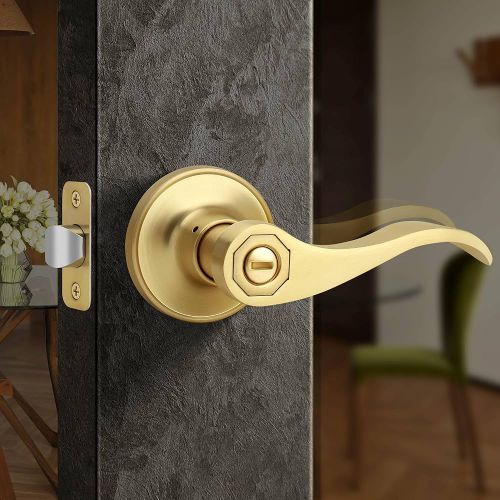
Difference Between Passage and Privacy Lockset
Learn the difference between passage and privacy locksets. Discover how bathroom privacy lock handles improve interior door functionality.
March 05, 2026
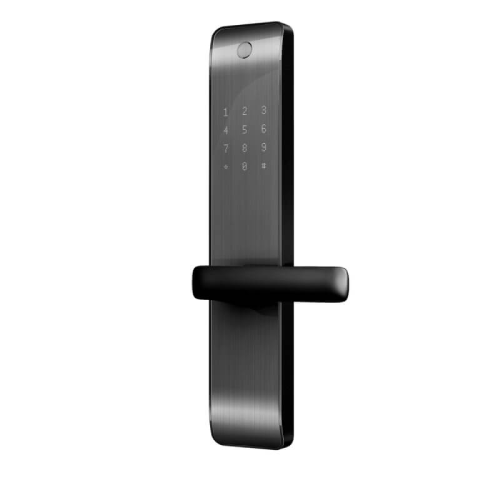
Modern Keyless House Door Lock for Secure Residential Access
Learn about smart door entry system security protocols, digital door entry systems selection criteria, and installation compatibility factors.
PRODUCT KNOWLEDGE - February 28, 2026
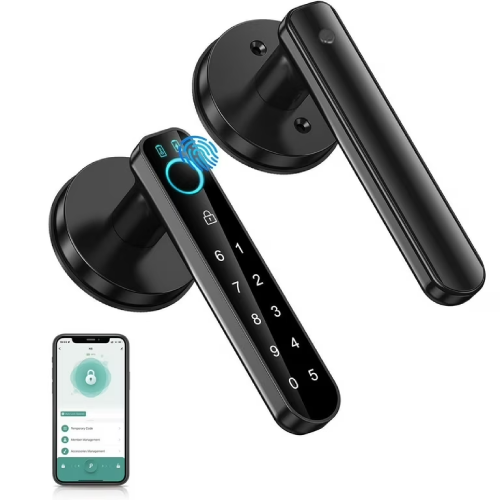
Why Modern Electronic Keypad Door Lock Technology Matters to Businesses
Explore modern electronic keypad door lock solutions for commercial use, covering security standards, smart integration, and OEM supply insights for global buyers.