2024-09-27
Is A Finger Edge Cabinet Pull The Same As An Edge Pull?
In the world of modern cabinetry, hardware choices play a significant role in both the aesthetic appeal and functional performance of cabinets and drawers. Among the variety of pulls and handles, the finger edge cabinet pulls and the edge pull are two sleek, contemporary options that are often confused with one another due to their similar minimalist designs. However, while they share certain similarities, they also have distinct differences that make them suitable for different design preferences and practical applications.
1. What Is a Finger Edge Cabinet Pull?
A finger edge cabinet pull, sometimes referred to as a finger groove pull, is a minimalistic type of hardware that is mounted on the edge of a drawer or cabinet door. It is specifically designed to provide a subtle and almost invisible handle option that does not detract from the smooth surface of modern cabinetry.
Design and Appearance:
The design of a finger edge pull involves a thin, recessed lip or groove that is positioned along the edge of a cabinet door or drawer. This groove allows the user to pull the door or drawer open using only their fingertips.
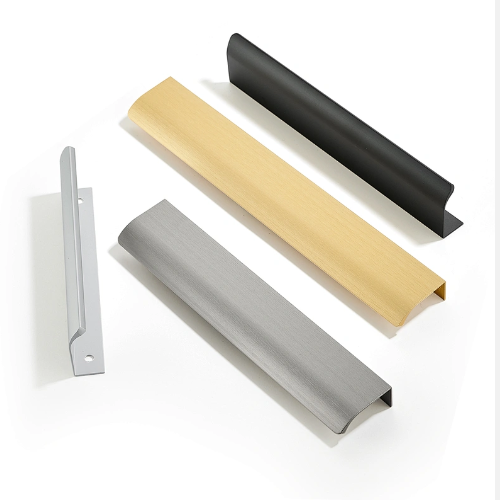
Finger edge pulls are often made from materials like stainless steel, aluminum, or brass, and can be finished in a variety of colors, including matte black, brushed nickel, and chrome. This ensures that they complement a wide range of cabinet styles and finishes.
Since they are recessed into the edge, they do not project outward like traditional knobs or handles, making them a great option for those looking to achieve a seamless, streamlined look.
Installation:
Installing finger edge cabinet pulls typically requires precise cutting or milling into the cabinet door or drawer edge to accommodate the groove where the user will place their fingers.
This installation method is more complex compared to surface-mounted hardware and may require professional assistance, especially if the cabinets are pre-built or if the material is difficult to cut.
Advantages of Finger Edge Cabinet Pulls:
Minimalism and Aesthetics: Finger edge pulls contribute to the sleek, uncluttered look that is highly desired in modern and minimalist kitchen designs.
Low Profile: Since they are recessed, they do not protrude into the room, making them ideal for smaller spaces where protruding handles might get in the way.
Ease of Cleaning: With fewer edges and surfaces to catch dust or grime, finger edge pulls are easy to clean and maintain.
Limitations:
Limited Grip: While they are visually appealing, finger edge pulls may not provide as much grip as traditional handles, making them less ideal for heavy drawers or large cabinet doors.
Complex Installation: As mentioned, the installation process for these pulls is more involved, often requiring specialized tools or professional expertise.
2. What Is an Edge Pull?
An edge pull is a type of handle that is attached directly to the edge or back of a cabinet door or drawer. It differs from the finger edge pull in that it is a physically separate piece of hardware that is mounted on the cabinet, often projecting slightly to give the user something to grasp.
Design and Appearance:
Edge pulls typically feature a narrow, vertical or horizontal profile that sits at the very edge of the door or drawer. They may have a protruding lip or tab that is easy to grip, allowing for comfortable opening and closing of the cabinets.
These pulls are commonly fabricated from metals like stainless steel, aluminum, or zinc alloy, and they come in a wide variety of finishes, including satin brass, brushed nickel, and oil-rubbed bronze. This versatility makes them suitable for both modern and traditional cabinetry.
Unlike finger edge pulls, edge pulls are more noticeable and slightly protrude, providing a more traditional but still subtle handle option.
Installation:
Installation of edge pulls is relatively straightforward, as they are surface-mounted hardware pieces that can be attached with screws. The installation does not require cutting into the cabinet, which makes it a simpler DIY-friendly option compared to finger edge pulls.
Edge pulls can be mounted vertically, horizontally, or at an angle, depending on the desired look and the orientation of the cabinet or drawer.
Advantages of Edge Pulls:
Better Grip: Edge pulls often offer more substantial grip due to their protruding design, making them more suitable for heavy or frequently used drawers.
Easy Installation: The surface-mounted design makes edge pulls easier to install and replace without specialized tools.
Versatility: Edge pulls can be used on a variety of cabinets and drawers, and they work well with both modern and transitional kitchen designs.
Limitations:
Slight Protrusion: While they are still minimalistic, edge pulls do protrude slightly from the cabinet surface, which may not align with the clean, uninterrupted lines of ultra-modern cabinetry.
Aesthetic Compatibility: Edge pulls may not be as "invisible" as finger edge pulls, making them less desirable in spaces where a fully flush, handle-free look is preferred.
3. Key Differences Between Finger Edge Cabinet Pulls and Edge Pulls
a. Design Intent
Finger Edge Cabinet Pulls: This pull is designed to be almost invisible, integrated into the edge of the cabinet or drawer for a smooth, flush appearance. It is ideal for those who prioritize aesthetics and a clean, modern look over ease of use.
Edge Pull: While still sleek, edge pulls are visible and project slightly from the surface of the cabinet. They are designed for a balance between functionality and a minimalistic look, offering easier grip access without compromising too much on style.
b. Installation Method
Finger Edge Cabinet Pulls: Requires a more complex installation process that involves cutting into the cabinet edge. It is often installed during the manufacturing process or by a professional.
Edge Pull: These pulls are surface-mounted and can be easily installed or replaced with basic tools, making them more DIY-friendly.
c. Grip and Usability
Finger Edge Cabinet Pulls: Provides a subtler grip, which might not be suitable for heavy or oversized drawers. It is ideal for lightweight or smaller cabinets where a gentle pull is all that is needed.
Edge Pull: Provides a more substantial grip due to its protruding design. It is better suited for larger, heavier drawers or cabinet doors where a firmer pull is required.
d. Aesthetic Considerations
Finger Edge Cabinet Pulls: Perfect for modern, minimalist kitchens or spaces where you want the hardware to disappear into the cabinetry, creating a seamless look.
Edge Pull: While still modern and minimal, edge pulls are more noticeable than finger edge pulls and are often selected when a balance between style and function is desired.
4. Which One Should You Choose?
The choice between a finger edge cabinet pulls and an edge pull comes down to personal preference, functional needs, and the overall design vision for your space.
If you're looking for a truly handle-free, modern design, the finger edge cabinet pulls is the way to go. However, if you need a more practical solution with an easier installation process and better grip, the edge pull will likely serve you better.
Explore our exceptional range of finger edge pull handles, along with a variety of other door handle options suited to different home systems. If you're ready to experience the benefits of a nickel drawer handles, visit Filta and discover a world of possibilities. Your perfect finger edge cabinet pulls is just a click away!