How Do I Adjust Kitchen Cabinet Hinges?
If you've ever noticed your kitchen cabinet doors not closing properly, sticking, or leaving uneven gaps, the issue likely lies in the hinges. One of the most common questions among homeowners is: how do I adjust kitchen cabinet hinges ?
But, What Are Kitchen Cabinet Hinges?
Kitchen cabinet hinges are mechanical devices that allow cabinet doors to open and close smoothly. They come in various designs to accommodate different styles of cabinetry — from traditional face frame cabinets to modern frameless systems.
The type of hinge you have will determine how you go about making adjustments. Common types include:
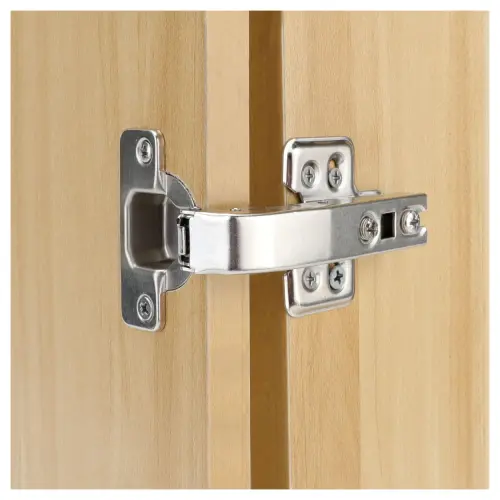
Frameless cabinet hinges (European style)
Face frame hinges
Concealed hinges
Surface mounted hinges
90 degree hinges for corner cabinets
Each of these requires slightly different adjustment techniques, which we'll explore in detail below.

Why Adjusting Kitchen Cabinet Hinges Is Important?
Misaligned or improperly adjusted hinges can lead to several problems:
Gaps between cabinet doors
Doors that won't close fully or stick when opening
Uneven door alignment
Increased wear on both the hinge and cabinet structure
Reduced lifespan of your kitchen cabinetry
Regular maintenance and timely adjustments can prevent these issues and keep your kitchen looking and functioning like new.
Tools You'll Need to Adjust Kitchen Cabinet Hinges
Before starting any adjustment process, gather the following tools:
Screwdriver set (both flathead and Phillips)
Allen wrench set (commonly used with European-style hinges)
Tape measure or ruler
Level (to check vertical alignment)
Pencil (for marking adjustments)
Lubricant spray (optional, for smoother movement)
Having the right tools on hand makes the job easier and more precise.
How to Adjust Frameless Cabinet Hinges (European Style)
Frameless cabinet hinges are among the most commonly used today, especially in modern kitchens. These concealed hinges offer three-axis adjustability, allowing for fine-tuning in multiple directions.
Step 1: Identify the Adjustment Screws
Most frameless cabinet hinges have three main screws:
Side-to-side adjustment screw (usually located at the base of the hinge arm)
Vertical adjustment screw (found near the top of the hinge body)
In-and-out adjustment screw (typically located on the mounting plate)
Step 2: Make Side-to-Side Adjustments
Use a screwdriver or Allen wrench to turn the side-to-side screw. Turning clockwise moves the door inward, while counterclockwise moves it outward.
This adjustment helps eliminate horizontal gaps between adjacent doors.
Step 3: Adjust Door Height (Up and Down)
Locate the vertical adjustment screw and turn it accordingly:
Turn clockwise to raise the door
Turn counterclockwise to lower the door
This is especially useful if one door sits higher than another or doesn't align with the countertop.
Step 4: In-and-Out Adjustment
This adjusts how far the door extends from the cabinet box. Turning the in-and-out screw:
Clockwise pulls the door closer to the cabinet
Counterclockwise pushes the door away
This is key for correcting binding or uneven door depth.
Adjusting Face Frame Cabinet Hinges
While frameless cabinet hinges are highly adjustable, face-frame hinges — typically found in more traditional kitchen layouts — have fewer adjustment points. However, minor tweaks can still be made.
Step 1: Loosen the Mounting Screws
Use a screwdriver to gently loosen the screws that attach the hinge to the cabinet frame. Don't remove them completely — just enough to allow slight movement.
Step 2: Reposition the Door
Gently move the door up, down, or side-to-side until it aligns correctly. Hold the door in place while tightening the screws back down.
Step 3: Shim If Necessary
If the gap remains uneven, consider adding small shims behind the hinge to correct misalignment.
Adjusting 90 Degree Hinge Setups for Corner Cabinets
Corner cabinets often use 90 degree hinge systems to maximize space and ensure smooth operation. These hinges are usually mounted inside the cabinet and require careful calibration.
Step 1: Check Door Alignment
Open the door and observe how it lines up with adjacent cabinets. If it swings too far or doesn't close flush, adjustment is needed.
Step 2: Adjust the Arm Screws
Most 90 degree hinge models have two adjustment screws:
One controls the door's position relative to the cabinet box
The other adjusts the tension and swing angle