
2026-01-06
Guide to Choose the Right Door Stopper
When it comes to seemingly simple hardware like a door stopper, many homeowners, facility managers, and interior designers underestimate its functional importance—until a door slams into a wall, a child's fingers get caught, or a gust of wind turns an open door into a safety hazard. While a quick Google search for “recommended door stopper manufacturers” returns thousands of results, the top 20 pages reveal consistent user concerns: durability, aesthetics, security, and suitability for specific environments like bedrooms or commercial spaces.
1. Material Science Meets Everyday Function: Why Zinc Alloy Dominates Premium Door Open Stoppers
At first glance, door stoppers appear deceptively simple. Yet the choice of material dramatically affects performance, longevity, and even safety. Plastic models may be cheap and colorful, but they crack under prolonged UV exposure or heavy impact. Rubber versions offer good grip but degrade over time, especially in high-traffic zones. Wooden stoppers blend with décor but lack structural resilience.
Enter metal—specifically, zinc alloy. Among metal door stopper options, zinc alloy has emerged as the gold standard in professional-grade hardware. Why? Its unique metallurgical properties combine high tensile strength with excellent corrosion resistance, making it ideal for both indoor and semi-outdoor applications. Unlike cast iron, which is brittle, or aluminum, which can bend under stress, zinc alloy maintains dimensional stability while resisting rust—critical for a component that may be stepped on, kicked, or subjected to repeated force.
Moreover, zinc alloy lends itself to precision die-casting, allowing for intricate designs without compromising structural integrity. This is why many recommended door stopper manufacturers—especially those serving architecture firms, hospitality chains, or healthcare facilities—favor zinc alloy for custom or OEM solutions. Take Filta, for instance: their high quality zinc alloy door stoppers are engineered not just to hold a door open, but to do so silently, securely, and without marring floors or walls.
For users searching “door open stopper” with durability in mind, understanding material science isn't academic—it's practical. A bedroom door stopper made from subpar plastic might work for a few months, but a zinc alloy version will last years, even in high-use households with children or pets.
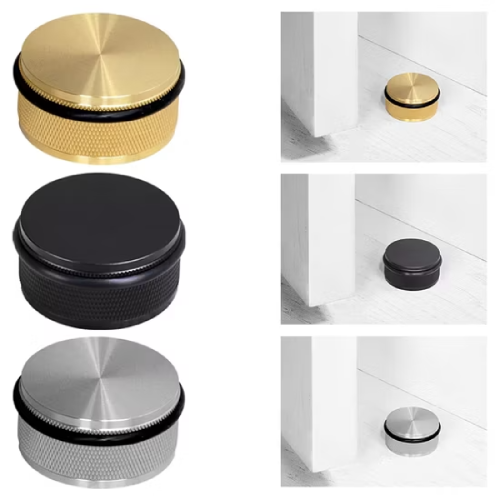
2. The Bedroom Door Stopper Dilemma: Balancing Quiet Operation, Safety, and Aesthetics
One of the most searched long-tail queries in this category is “bedroom door stopper.” Why? Bedrooms present unique challenges that general-purpose stoppers often fail to address.
First, noise matters. A loud metallic clank when a door hits a stopper can disrupt sleep or concentration—especially in children's rooms or shared living spaces. Second, safety is paramount. Sharp edges, loose parts, or trip hazards are unacceptable where bare feet and playful movement are common. Third, aesthetics cannot be ignored. Unlike utility closets or garages, bedrooms demand hardware that complements décor—whether minimalist, vintage, or modern farmhouse.
This is where thoughtful engineering shines. A well-designed bedroom door stopper often features a soft-contact element (such as a rubberized tip or silicone insert) paired with a low-profile base. The base must be heavy enough to stay put but not so large as to obstruct under-door clearance. Some models even integrate magnetic or adhesive systems to avoid drilling altogether—ideal for renters or historic homes.
Interestingly, metal doesn't have to mean “loud” or “industrial.” High end zinc alloy stoppers can be powder-coated in muted tones (matte black, brushed nickel, antique brass) and paired with noise-dampening components. Manufacturers who specialize in OEM production, like Filta, often offer customization in finish and form factor precisely to meet these nuanced residential needs. The key is recognizing that a bedroom door stopper isn't just a wedge—it's a silent guardian of peace, safety, and style.
3. Beyond Holding Doors Open: The Critical Role of Metal Door Stopper Security in Modern Spaces
When users search for “metal door stopper security,” they're often thinking beyond convenience—they're thinking protection. In both residential and institutional contexts, a door stopper can serve as a subtle but effective security measure.
Consider this: in homes, a robust metal door stopper placed behind an entry door can prevent forced entry by limiting how far the door can swing inward—a simple yet often overlooked deterrent. In schools, hospitals, or office buildings, door stoppers help maintain clear egress paths during emergencies while preventing doors from slamming shut in high-wind conditions or during rapid evacuations.
But not all metal stoppers are equal in security performance. The weight, base footprint, and anchoring method determine whether a stopper will hold under pressure—or become a projectile. Floor-mounted models with screw-in anchors offer superior resistance compared to freestanding versions. Additionally, anti-slip surfaces and non-marring bases ensure the stopper stays in place without damaging expensive flooring.
Security also involves tamper resistance. In public or semi-public spaces, removable stoppers can be stolen or misused. Fixed or tamper-proof designs—often produced by specialized OEM manufacturers—are therefore preferred. Zinc alloy, again, proves advantageous here: its density provides heft, while its machinability allows for integrated security features like concealed fasteners or tamper-resistant screws.
Thus, “metal door stopper security” isn't just about strength—it's about intelligent design that anticipates real-world threats, from break-ins to accidental injuries. For architects and safety officers, specifying the right stopper is part of holistic building safety planning.
4. How to Evaluate “Recommended Door Stopper Manufacturers”: Quality Signals Beyond Marketing
PRODUCT KNOWLEDGE - March 10, 2026
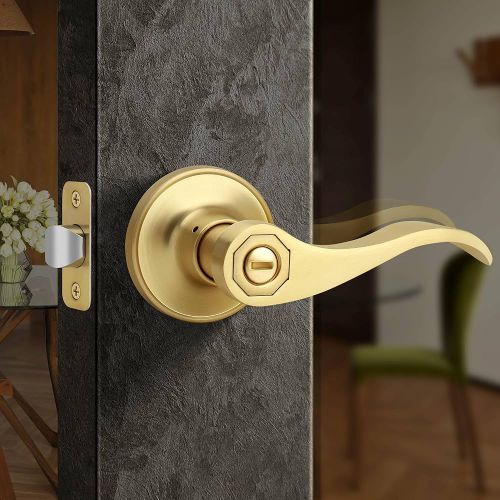
Difference Between Passage and Privacy Lockset
Learn the difference between passage and privacy locksets. Discover how bathroom privacy lock handles improve interior door functionality.
PRODUCT KNOWLEDGE - February 28, 2026
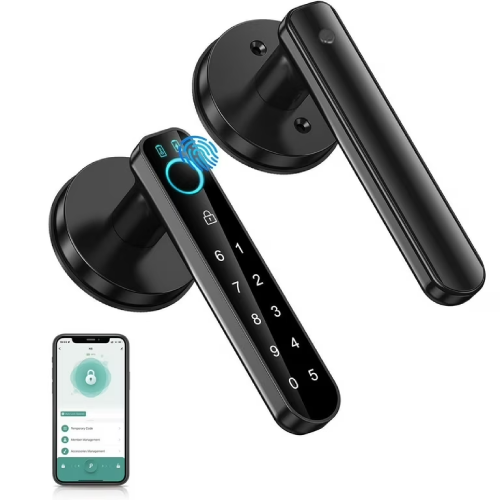
Why Modern Electronic Keypad Door Lock Technology Matters to Businesses
Explore modern electronic keypad door lock solutions for commercial use, covering security standards, smart integration, and OEM supply insights for global buyers.
PRODUCT KNOWLEDGE - February 26, 2026
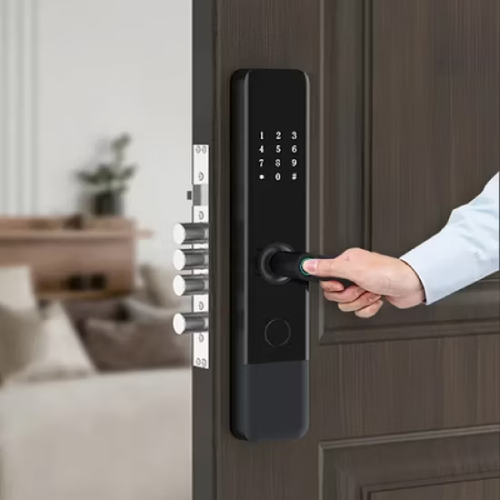
Why Electronic Entry Door Locks Are Transforming Security
Electronic entry door locks for commercial use. Explore digital lock for front door and keyless deadbolt lock solutions for secure, scalable access control.