
2025-12-29
Different Types of Door Stops
In both residential and commercial architecture, door hardware is often evaluated by visibility and aesthetics, while components like door stoppers remain underappreciated despite their functional importance. In reality, different door stopper types directly influence wall protection, door longevity, user safety, and spatial efficiency. Understanding how each type works—and where it performs best—is essential for making informed decisions rather than relying on habit or guesswork.
Chapter 1: What Are Door Stoppers and Why Are They Necessary?
A door stopper is a mechanical device designed to control the movement of a door by limiting its swing, absorbing impact, or holding it in a fixed open position. While simple in concept, its function intersects with building protection, ergonomics, and safety management.
Core Functional Purposes of Door Stoppers
Across all environments, door stoppers serve several critical roles:
Prevent structural damage to walls, baseboards, cabinetry, and glass partitions
Reduce wear on door hardware, including hinges, frames, and handles
Control door movement in high traffic or wind exposed areas
Improve safety by preventing sudden or uncontrolled door swings
In residential spaces, door stoppers are especially important where lightweight drywall, decorative finishes, or narrow clearances are involved. In such cases, selecting the correct residential door stops can significantly reduce long term maintenance.
Chapter 2: Different Door Stopper Types and How They Function
Understanding door stopper types begins with categorizing them by installation position and mechanical principle. Each type addresses specific spatial and functional constraints.
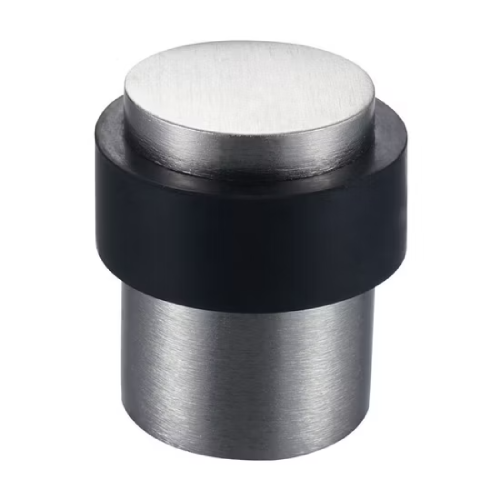
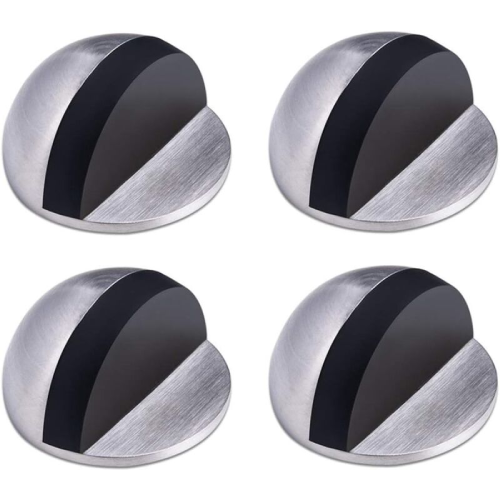
Floor Mounted Door Stoppers: Heavy Duty Floor Door Bumper Solutions
A floor door bumper is installed directly onto the floor surface and stops the door at a predefined point along its swing path. This type is widely used where wall mounting is impractical or insufficient.
Key Characteristics:
High impact resistance, suitable for solid wood or metal doors
Independent of wall structure or baseboard geometry
Stable stopping point that does not shift over time
Typical Applications:
Doorways opening into open plan spaces
Exterior or balcony doors
Areas with glass walls or curtain walls
Because floor mounted stoppers absorb force at a lower leverage point, they are often the preferred solution for heavier doors or frequent daily use.
Wall Mounted and Baseboard Door Stops for Residential Use
Wall mounted door stops are among the most common residential door stops, particularly in bedrooms, bathrooms, and living spaces.
Common Variations Include:
Baseboard door stops, fixed directly to skirting boards
Wall bumpers, installed at the point of door handle impact
Spring style door stops, which flex to absorb impact energy
These door stopper types are valued for their simplicity and cost efficiency. However, their performance depends heavily on wall material quality and correct positioning.
Baseboard mounted options are particularly effective where doors open parallel to a wall and baseboard alignment allows precise placement.
Hinge Pin Door Stoppers: Minimalist Swing Control
Hinge pin door stoppers attach directly to the door hinge and limit how far the door can open. Rather than absorbing impact, they mechanically restrict the swing arc.
Advantages:
No drilling into walls or floors
Highly discreet and visually unobtrusive
Adjustable swing limitation
This type is well suited to finished interiors where preserving wall surfaces is a priority, such as rental properties or recently renovated homes.
Magnetic and Hold Open Door Stoppers
Magnetic door stoppers combine impact control with a holding mechanism. Once the door reaches a designated position, a magnetic catch engages to keep it open.
Functional Benefits:
Prevents doors from drifting or slamming shut
Useful in ventilation-sensitive rooms or corridors
Reduces repeated door movement in high use spaces
These systems are commonly found in both residential and light commercial environments, especially where doors must remain open for extended periods without manual wedges.
Chapter 3: Materials, Durability, and Performance Considerations
Beyond selecting a door stopper type, material choice plays a decisive role in longevity, performance, and visual integration.
Common Materials Used in Door Stoppers
Rubber: Excellent shock absorption and floor protection, though prone to aging over time
Stainless steel: High corrosion resistance, suitable for humid or outdoor-adjacent spaces
Zinc alloy: Combines strength, casting precision, and surface finish versatility
Brass or aluminum: Often selected for decorative consistency with door hardware
PRODUCT KNOWLEDGE - March 10, 2026
Difference Between Passage and Privacy Lockset
Learn the difference between passage and privacy locksets. Discover how bathroom privacy lock handles improve interior door functionality.
March 05, 2026
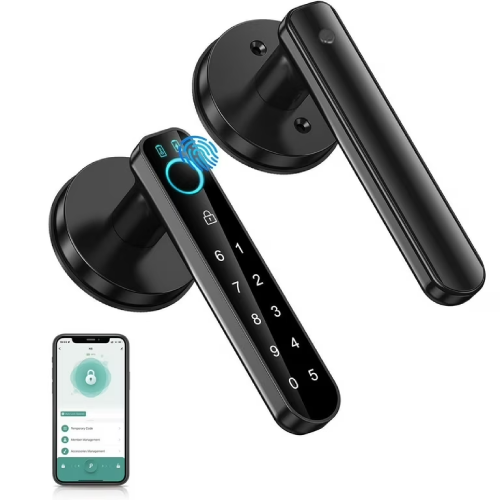
Modern Keyless House Door Lock for Secure Residential Access
Learn about smart door entry system security protocols, digital door entry systems selection criteria, and installation compatibility factors.
PRODUCT KNOWLEDGE - February 28, 2026
Why Modern Electronic Keypad Door Lock Technology Matters to Businesses
Explore modern electronic keypad door lock solutions for commercial use, covering security standards, smart integration, and OEM supply insights for global buyers.