What Is the Difference Between a Drawer Glide and a Drawer Slide?
When it comes to cabinet and furniture hardware, terms like drawer glide and drawer slide often appear interchangeable. However, for homeowners, carpenters, and furniture manufacturers, understanding their differences is crucial. The choice between glides and slides directly affects how smoothly a drawer operates, how much weight it can handle, and how long it will last.
Chapter 1: What Do We Mean by “Glide” vs. “Slide”?
1.1 Understanding the Terms
In furniture hardware, both “glide” and “slide” refer to components that allow drawers to move in and out. Yet, their design and performance can be quite different.
A drawer glide is typically a simple rail system, often using plastic or nylon wheels to help the drawer move. It's a low-cost solution commonly found in light-duty furniture, such as dressers or office desks.
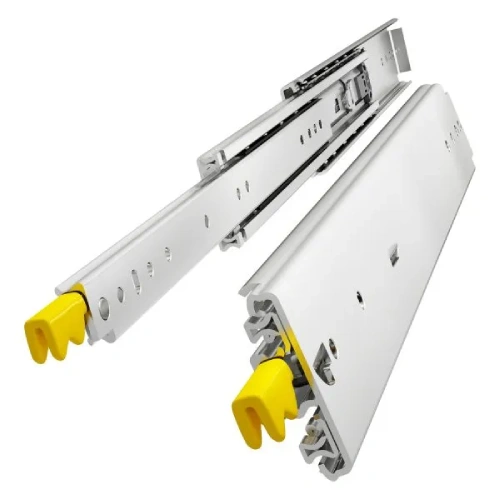
A drawer slide, on the other hand, usually features a more advanced ball-bearing mechanism that allows for smoother, quieter, and more durable operation. Slides are designed to handle greater loads and longer service life, making them ideal for heavy-use environments like kitchens, workshops, or tool cabinets.
1.2 Why the Difference Matters
Choosing between glides and slides depends on how you use your furniture. For lightweight storage and occasional use, glides may be sufficient. But for professional or industrial applications — where drawers carry heavy tools, parts, or equipment — heavy duty drawer slides are essential.
Using the wrong mechanism can lead to poor movement, drawer sagging, or even hardware failure. That's why it's important to rely on a trusted manufacturer such as FILTA, whose high quality drawer slides are engineered for strength, smoothness, and long-term reliability.
Chapter 2: How Are Glides and Slides Constructed Differently?
2.1 Mechanism Design
The core difference between glides and slides lies in their movement systems:
Drawer glides use rollers or simple friction rails. These systems rely on contact between the drawer and cabinet surfaces, making them more prone to wear over time.
Drawer slides use steel ball bearings and telescopic rails that reduce friction and ensure effortless movement even under heavy loads.
2.2 Load Capacity and Extension
Because of their mechanical design, slides can handle much greater weight. Heavy load drawer slides from manufacturers like FILTA can support over 100 lbs per pair and still provide smooth, full extension movement.
Glides, in contrast, are usually limited to partial extension — around 75% of drawer depth — and are best suited for lighter items.
2.3 Mounting and Appearance
Drawer slides come in several configurations:
Side mount slides: Easy to install, suitable for heavy loads.
Undermount slides: Hidden beneath the drawer for a sleek look, often with soft-close features.
Center mount slides: A single rail under the drawer, used for lighter applications.
Glides, on the other hand, tend to be visible from underneath or the side, giving a more basic appearance.
2.4 Material and Manufacturing Quality
The quality of materials also differs. High quality drawer slides like those from FILTA are made of cold-rolled steel and undergo cycle and salt-spray testing to ensure corrosion resistance and durability. Glides, typically made of thinner metal or plastic, lack this level of robustness.
Chapter 3: When Should You Choose a Glide and When a Slide?
If your drawer will only hold light items like clothes, stationery, or small household goods, a glide might be enough. But for storage drawers, workshop benches, or kitchen cabinets that carry heavy pots, tools, or machinery, heavy duty drawer glides or heavy load drawer slides are the better option.
3.2 Functional Features
Modern drawer slides can include advanced mechanisms:
Soft close drawer slides: Automatically slow down and close quietly.
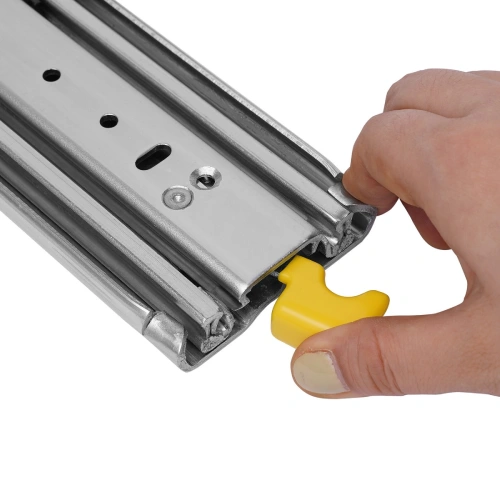
Heavy duty locking drawer slides: Keep drawers securely in place, ideal for vehicles or industrial trolleys.
Such features are rarely available in simple glides, which further distinguishes slides as the professional choice.
3.3 Cost vs Value
While glides are cheaper initially, slides provide far greater value over time thanks to their strength, stability, and smooth operation. Investing in high quality drawer slides reduces maintenance costs and enhances user satisfaction.
3.4 Application Scenarios
| Application Type | Recommended Hardware |
| Light home drawers | Drawer glides |
| Kitchen drawers | Soft close drawer slides |
| Tool cabinets | Heavy duty drawer slides |
| Vehicle or mobile storage | Heavy duty locking drawer slides |
| Industrial use | Heavy load drawer slides |
Chapter 4: Why Choose FILTA Drawer Slides?