
2024-07-09
Are There Different Thicknesses of Door Hinges?
Of course! Door hinges come in different thicknesses, which can vary depending on the type of door, its weight, and the intended use, so it’s hard to choose thin door hinge or thick door hinge. The thickness of a door hinge is often referred to as the gauge.
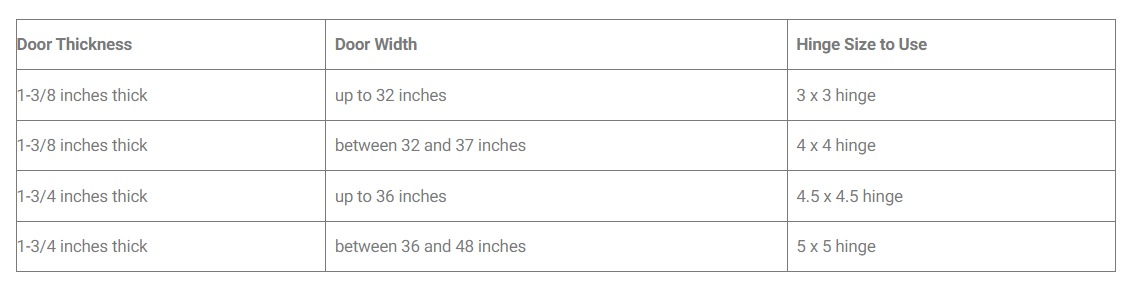
Specification Details
When choosing the best hinge for your door application, you will need to consider these factors below:
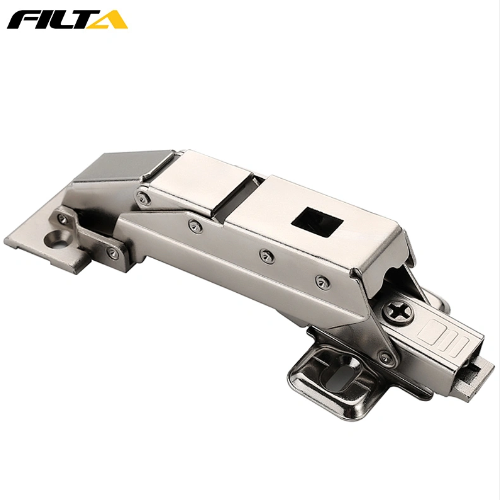
Hinge Types: There are five most common types of door hinges: butt hinges, concealed hinges, continuous hinges, pivot hinges and strap hinges.
Base Metal: This term refers to the material composition of the hinge, regardless of its color. Common base metals include steel, solid brass, aluminum, bronze, wrought iron and stainless steel.
Steel is the strongest hinge material, but also corrosive. Best suited for indoor, low humidity environments. Can be used in fire rated or labeled applications.
Solid brass is non corrosive, rust resistant, and decorative, solid brass is not as strong as steel or stainless steel. It cannot be used on fire rated or labeled doors due to its low melting point. Aluminum is corrosion and rust resistant, lightweight, and recyclable. Aluminum hinges may qualify for LEED (Leadership in Energy and Environmental Design) points due to features like recycled content, low emitting materials (no VOCs), and regional materials. They can be used in fire rated openings up to 3 hours, but you must specify 3 hour fire rating at the time of your order. Bronze is attractive, corrosion resistant, and self lubricating, bronze hinges won't squeak. The surface will oxidize over time, giving it a unique appearance.
Wrought iron is strong, hand forged hinges that provide old world charm for entryways. They can be corrosion resistant. Easily welded, wrought iron opens up more hinge design options.
Stainless steel is a very strong, rust resistant material. Heavier than aluminum and typically more expensive, stainless steel can be polished to a satin or bright finish. This hinge material is fire rated.
Size: This refers to the height and width of the open hinge (leaves spread). Common sizes are 3-1/2"x3-1/2", 4"x4", 4-1/2"x4-1/2".
Thickness: The thickness of the hinge leaves is measured in Imperial Gauge or millimeters but is often marketed with generic terms like "residential" (thin) or "heavy duty" (thicker). Residential hinges typically range from 2mm to 2.5mm in thickness, while heavy-duty hinges are generally between 3.0mm and 3.5mm.
Bearing: This refers to the mechanical structure that supports the door's weight. Common types of bearings include Plain Bearing, Ball Bearing, and Spring (Self-Closing). Plain bearings have a straight pin, ball bearings include ball bearings in the barrel to reduce friction and support heavier doors, and spring bearings (also known as "self-closing" or "Bommer" hinges) feature a tension spring in the barrel to close the door. Most hinges are plain bearing by default, with other bearings specified as needed.
Finish (or Color): The color of the hinge is specified according to ANSI (US) standard finishes or sometimes BHMA standard finishes. Common finishes include US15 Satin Nickel, US10B Oil-Rubbed Bronze, US3 Bright Brass, US15A Antique Nickel, US26 Bright Chrome, US26D Brushed Chrome, and others.
Corner: Standard hinge corner is a 1/4" radius corner. Other corner options include square corner and 5/8" radius corner. All hinges are mortised into the jamb and door.
Leaf Height: As the table above indicates, the hinge height you’ll need will be a product of door thickness and door width. For example, a 1 3/4-inch exterior door that is 36 inches wide will require a 4 1/2-inch or 5-inch hinge.
Determining Backset: Backset is the distance from the edge of the door to the edge of the hinge or hinge mortise (cutout). This measurement is crucial as it determines the door's position relative to the frame. A general guideline for calculating hinge backset is as follows: for door thicknesses ranging from 1 3/8 inches to 2 ¼ inches, the standard backset should be 1/4 of an inch. For doors with a thickness of 2 1/2 inches, the standard backset is usually 3/8 of an inch. If you have any doubts about backset measurements, feel free to ask our friendly team for assistance.
Other Details and Considerations
PRODUCT KNOWLEDGE - March 10, 2026
Difference Between Passage and Privacy Lockset
Learn the difference between passage and privacy locksets. Discover how bathroom privacy lock handles improve interior door functionality.
March 05, 2026
Modern Keyless House Door Lock for Secure Residential Access
Learn about smart door entry system security protocols, digital door entry systems selection criteria, and installation compatibility factors.

PRODUCT KNOWLEDGE - February 28, 2026
Why Modern Electronic Keypad Door Lock Technology Matters to Businesses
Explore modern electronic keypad door lock solutions for commercial use, covering security standards, smart integration, and OEM supply insights for global buyers.