
2026-02-24
The Rise of Smart Keyless Entry Door Locks
In an era where security, convenience, and operational efficiency are at the forefront of building management, smart keyless entry door locks have shifted from niche to necessity across industries. Whether securing office buildings, healthcare facilities, warehouses, or multi-tenant residential properties, intelligent access solutions are replacing traditional mechanical locks with networked, digital systems that deliver greater control, auditability, and adaptability.
Understanding Smart Keyless Entry Door Lock Technology
What Defines a Smart Keyless Entry Door Lock?
At its core, a smart keyless entry door lock is an access solution that enables entry without a physical key, instead using electronic mechanisms such as passcodes, proximity credentials, mobile credentials, biometrics, or remote authorization. Unlike mechanical locks, these systems often integrate with broader security ecosystems and provide data about usage, status, and access history.
Key components of smart entry systems include:
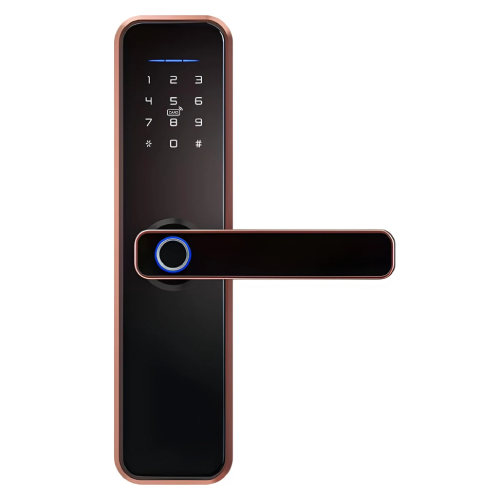
Authentication Interface: Such as a digital keypad door lock, card reader, or biometric sensor.
Electronic Actuator Mechanism: To engage or disengage latching hardware.
Communication Module: Supporting Wi-Fi, Bluetooth, RFID, or other protocols for remote or local control.
Control Software or Management Platform: Allowing administrators to assign credentials, view logs, and configure policies.
In commercial environments, the expectation is not just door opening but an integrated security posture that reflects organizational policies and compliance requirements.
How Digital Keyless Door Locks Work?
While traditional locks rely on mechanical tumblers and physical keys, digital keyless technologies encode credentials that are matched against permitted access lists. In the case of a digital keypad door lock, a user enters a numeric passcode, which is verified by onboard logic. If the input matches an authorized code, an electric motor or solenoid actuates the latch to permit entry.
In more advanced systems — part of broader commercial keyless door entry systems — authentication can involve multi-factor approaches:
Something You Know: PIN code or password
Something You Have: RFID card, fob, or mobile credential
Something You Are: Biometric identifiers (fingerprint, facial recognition)
This layered approach bolsters security while offering flexibility in how access is granted. Integrators and security planners often select authentication modes based on risk profile, user population size, and operational priorities.
Why Keyless Commercial Door Locks Are Gaining Traction?
Organizations across sectors are embracing keyless technologies for several intertwined reasons:
Elimination of Key Management Burdens: Lost or duplicated keys present ongoing risks and operational overhead.
Enhanced Audit Trails: Digital access control logs every entry attempt with time stamps and user IDs.
Remote Access and Policy Flexibility: Administrators can grant or revoke access without rekeying locks.
Integration with Security Ecosystems: Including video surveillance, alarm systems, and workforce management tools.
In environments where security compliance, incident tracking, or access auditing is mandated — such as healthcare, logistics, or government facilities — these capabilities are no longer optional but intrinsic to operational integrity.
Commercial Perspectives: Deploying Keyless Commercial Door Locks at Scale
Commercial Keyless Door Entry Systems in Enterprise Environments
While small-scale installations might use standalone smart locks with basic passcode capabilities, commercial deployments typically require commercial keyless door entry systems with centralized management and multi-site governance.
In such systems, a network of locks is managed via:
On-Premises Access Control Servers: Offering robust policy control within a private network.
Cloud-Hosted Platforms: Allowing web-based administration, remote credential issuance, and real-time monitoring from any location.
Hybrid Architectures: Combining on-site controllers with cloud synchronization for redundancy and responsiveness.
These architectures support large user bases, multiple access groups, and complex scheduling (e.g., different access rights by time of day or role).
Integration with Workforce and Security Ecosystems
Modern facilities rarely operate door locks in isolation. Instead, keyless solutions intertwine with building automation, workforce identity systems, and real-time alerts. Examples include:
Badge integration with HR systems: Automatically provisioning access credentials when an employee is onboarded.
Visitor access workflows: Time bound passcodes or QR codes delivered via email or mobile app.
Event logging synced with SIEM tools: Feeding access logs into security information and event management platforms for correlation and threat detection.
For a B2B decision-maker, the ability of keyless commercial door locks to interoperate with these systems is a strategic advantage, reducing fragmentation in security coverage and simplifying oversight.